24.07.2026
ADVERTISING & EVENTS
An event without coverage on social media or a short promotional video is virtually non-existent. All MICE events live on not only on the day they take place, but also long afterwards – whether in posts on LinkedIn or Instagram. Photos also end up on brands’ websites, in agencies’ proposals, and are sometimes sent to sponsors as summaries of the event. For the organiser, this is a natural part of communication, but participants do not always realise that their one-off attendance can have far-reaching consequences.
Does simply attending an event constitute consent to the use of one’s image? The answer is typically a legal one: it depends. It depends, first and foremost, on the following: who? How? Why? And where?
It is important to remember that a likeness is not just someone’s face. In practice, it encompasses any recording of a person’s features that allows them to be recognised. This will therefore primarily be the face, but also the silhouette, distinctive clothing, hairstyle or even a voice in a recording. If a photograph or recording shows a person (or their features) in such a way that they can be identified, you should consider whether their image is already protected.
It is also worth noting that the statutory regulation, when referring to the protection of an image, applies exclusively to its dissemination – that is, making it available to the public in a way that allows an indefinite group of people to view the likeness. The mere recording of an image, however, falls outside the scope of the regulation.
Fortunately, this does not mean that every photograph taken at an event requires the individual consent of every person visible in it – this could lead to absurd situations. Two exceptions are particularly important for the MICE sector: the recording of a person as part of a larger whole, and the use of the image of a person in the public eye in connection with their public, professional or social functions.
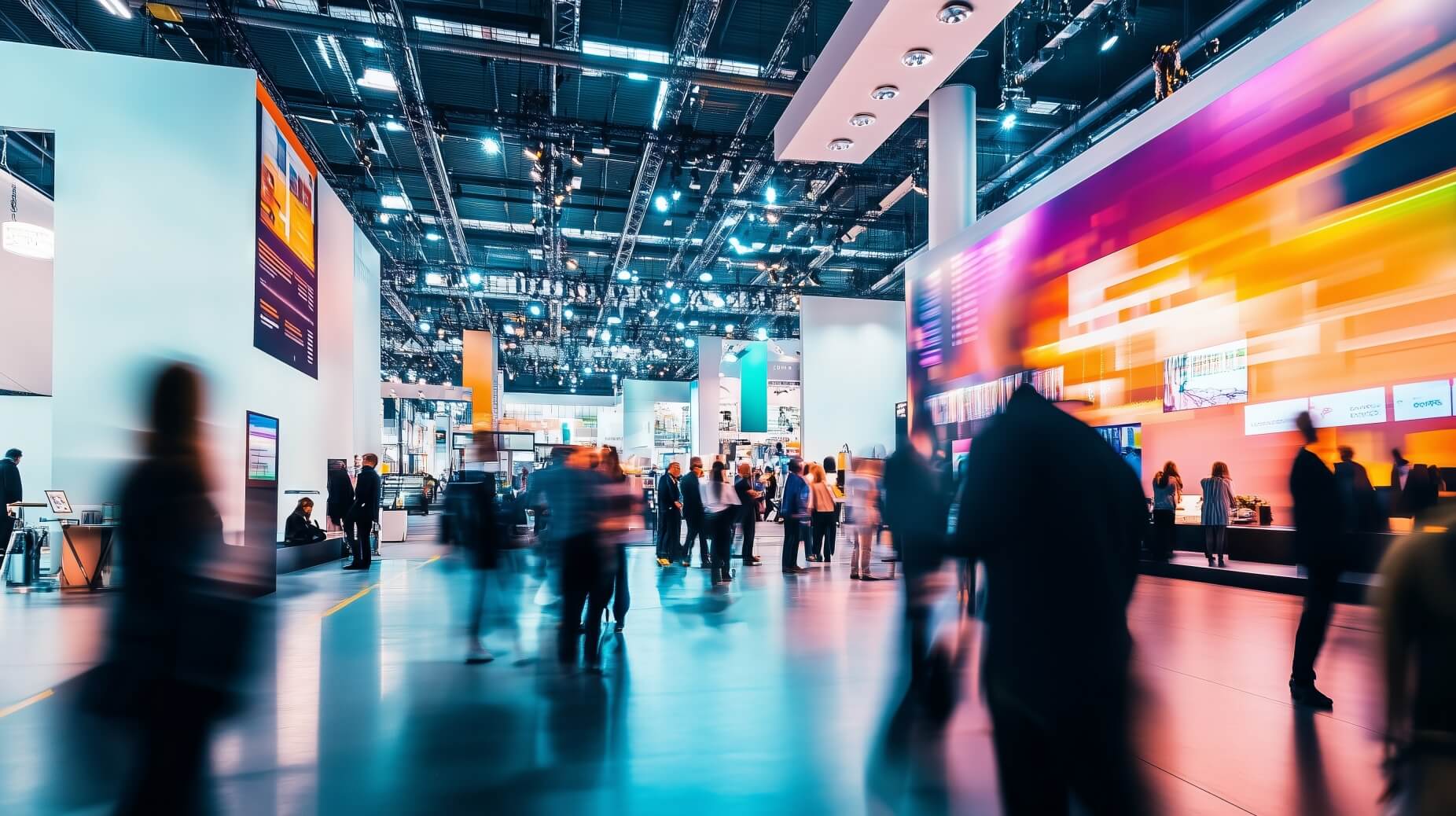
The safest scenario involves wide shots of the audience in which individual people are merely part of a larger whole. Such material usually serves a documentary purpose: it shows the turnout, atmosphere and nature of the event. But when can we speak of an audience, and when of individual people? The boundary is not always clear-cut, and each case must be analysed individually. It may be helpful to ask: are the people in question merely part of the image, or are they its main focus? If a photograph shows a crowd listening to a talk, the risk is minimal. However, if the organiser singles out a single person from the audience, highlighting their face or other features, this is a sign that it is worth ensuring consent has been obtained.
The situation is different for people who are performing a specific role during the event: speakers, presenters, performers or representatives of the organiser. Their participation, by its very nature, involves a higher level of public exposure. If someone is performing on stage, giving a talk or chairing a panel, and knows that the event will be documented, they must expect that their image will be recorded and subsequently disseminated. However, this does not imply automatic consent to every use of photographs featuring these individuals. A report on a conference published, for example, on social media is one thing; the use of a speaker’s image in an advertising campaign for a subsequent event is quite another. Therefore, in the case of public figures, it is best to set out these matters in the contract, a speaker agreement or another document governing the collaboration. The consent should specify whether it covers only reporting on the event, or also its promotion, paid advertisements, partners’ materials and communications regarding future editions. It is worth bearing in mind that consent does not have to be in writing, but it cannot be implied. It may be expressed through any behaviour on the part of the individual that sufficiently reveals their intention. For example, if a speaker looks into the camera and raises no objections to their image being recorded or the subsequent use of the footage, it can be assumed that they have consented to the dissemination of their image – but only to the extent implied by the context of the situation.
In the events industry, many risks arise from the fact that the same material comes to be used in different contexts. A photograph from a panel discussion may first appear in an event report, then in a summary for partners, later in an agency’s sales presentation, and finally in an advertising campaign for the next edition. Each subsequent use may alter the legal assessment of the use of the image. The more the material is of an informative or documentary nature, the greater the scope for applying exceptions and general principles. The more it becomes advertising, sales communication or an element of brand image-building, the more essential it is to obtain the explicit consent of the person visible in the material. Common notices at the entrance, such as ‘participation in the event constitutes consent to being photographed and filmed’, may serve an informative and organisational purpose, but they do not always suffice as full and proper consent. Such consent will be limited to the context that a participant could reasonably have expected. This means that it will be less risky to share photographs accompanied by information about the course of the event, but the use of an image to promote
future editions may fall outside the scope of consent. In practice, it is advisable to combine several tools: information in the event terms and conditions, on-site signage, clauses in the registration form, and separate consents for individuals in the public eye (e.g. speakers).
An image consent form does not need to be long, but it should answer a few basic questions that will clearly define its scope: who may use the image, for what purpose, in what materials and channels, for how long and within what territory. It is also worth specifying whether the consent covers sponsors, partners, agencies organising the event and the media, and whether it applies to paid advertising campaigns and future editions of the event. It is best to avoid overly general phrases such as ‘forever, everywhere and for all purposes’, as these may be challenged. In the MICE sector, a practical distinction is often more effective: a separate basis for event documentation, a separate one for its promotion, and yet another for the use of an image in a sponsor’s advertisement or an employer branding campaign. A photograph or video recording of an identifiable person may also constitute personal data. The organiser should therefore bear in mind not only the need for consent to the dissemination of the image, but also the information obligations arising from data protection legislation.
Photographing and filming events in an age dominated by social media is natural, necessary and, as a rule, permissible. The regulations on image protection are also sufficiently balanced to strike a fair balance between the rights of the individual and the needs of the market. The safest approach is to distinguish between the different ways in which photographs are used, clearly inform participants about the recording of images and sound, obtain the relevant consents, and establish well-thought-out rules for sharing materials with partners. It is also worth ensuring there is a straightforward process for responding to requests to remove a photograph. A good photograph can promote an event for years to come. A well-drafted consent form and procedure ensure that this can be done without unnecessary risk.
 Just provide your e-mail address and receive notifications about the latest posts on the SKP/IPblog blog directly to your inbox
 We will not send you spam messages
The administrator of your personal data is a SKP Ślusarek Kubiak Pieczyk sp.k. with its registered office in Warsaw, at ul. Ks. Skorupki 5, 00-546 Warszawa.
We respect your privacy, therefore the data provided to us will not be processed and made available outside the SKP for purposes other than those included in the Terms of Service. Detailed provisions regarding our IP Blog, including a catalog of your rights related to the processing of personal data, can be found in the Privacy Policy.
Just provide your e-mail address and receive notifications about the latest posts on the SKP/IPblog blog directly to your inbox
We will not send you spam messages
The administrator of your personal data is a SKP Ślusarek Kubiak Pieczyk sp.k. with its registered office in Warsaw, at ul. Ks. Skorupki 5, 00-546 Warszawa.
We respect your privacy, therefore the data provided to us will not be processed and made available outside the SKP for purposes other than those included in the Terms of Service. Detailed provisions regarding our IP Blog, including a catalog of your rights related to the processing of personal data, can be found in the Privacy Policy.